Helvick Head to Ballycotton via Youghal

Day 106, Friday 14 April 

Having already been down to the remote Helvick Head and back last night, this morning’s departure was from Dungarvan, where I had spent the night in the Park Hotel. Many thanks to the management and staff for their kind support of the RNLI. A great place to stay, with great food and almost every conceivable leisure facility. Alas, no time to indulge.

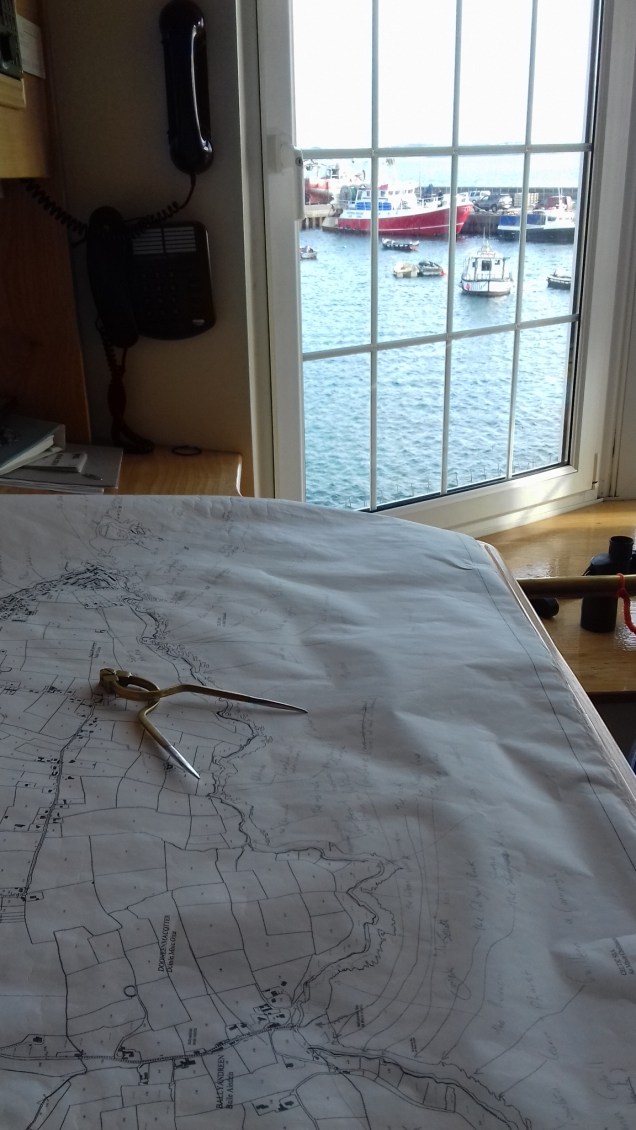
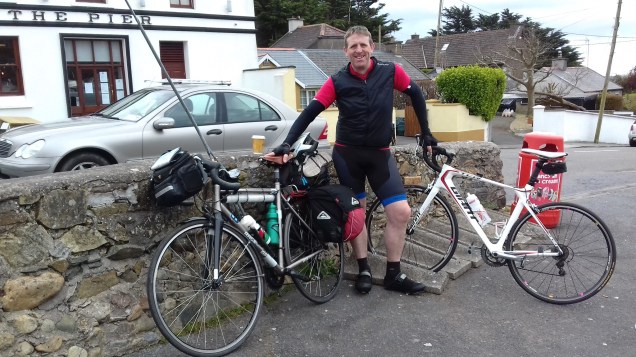
Today’s first rendesvous was with a few keen cyclists from Youghal Lifeboat Station. John (LTO) had already insisted on arranging for all my baggage to be picked up, so that unladen Fondo and I could breeze through Dungarvan and up the long climb out…   8 miles later, we were still climbing, into a gentle but cold headwind! Thanks be to Laura, on this Good Friday, that I was travelling light today. John(crew training co-ord), ‘Tuck’ (Helm), Liam (ILB crew) and young Jason (future crew) met me, as planned, about half way to Youghal, turned back into wind and set a cracking pace, like a mini peloton, all the way down & around the coast to Youghal.

20170414_113624An unexpected and impressive reception had been arranged for our arrival at their ILB Station, where lunch had been prepared. And that’s not where the Youghal hospitality and support ended. A very generous contribution to the fund plus continued company on the road all the way to Ballycotton ALB Station. If I had cycled solo, as normal, fully laden, into wind, I might have arrived just about on schedule. But with the Youghal effect, we were there about an hour ahead of time.

Many, many thanks this time, to Derry (LOM), Mark(DLA), Brendan (DLA), Seamus (mech) and Laura (catering & transport) plus the aforementioned intrepid cyclists. On arrival, it was immediately clear that the crews of today’s two flanking stations get on very well, sometimes meeting out at sea on a joint exercise or combined call to service.20170415_092709

Ballycotton Lifeboat Station overlooks the harbour, with a good range of small fishing boats and the tall Trent Class all-weather Lifeboat proudly taking centre stage on it’s mooring at the harbour entrance. More crew to meet here, including Eolan (Cox’n), Peter (Mech), Sìla, Clare, Stephen & Barry (crew). The early arrival allowed more time for shared refreshments and Lifeboat banter. Where does the time go? Many thanks Eolan, Nessa and Saoirse for the warm welcome and invitation to join you at your family table for a very Good Friday fish supper.

Dunmore East to Helvick Head via Tramore

Day 105,  Thurs 13 April 

Today’s thank yous go to:

  • The many committee and crew members of Dunmore East Lifeboat for such a great reception, organising my overnight stay for me at The Haven and fixing Fondo’s wobbly pannier rack.20170413_113010
  • George Pepper, the Waterford cyclist who joined me for a few miles on the road to Tramore, shared very useful local knowledge and bought me a coffee.
  • Frank N, Eamon M and Damian for meeting me at the bottom of the steep approach to their ILB Station at Tramore and the kind donation, via me, to the institution they have already given many years of voluntary service.20170413_172158
  • Sean at Helvick Head for the full tour and history of the ILB Station.
  • The Park Hotel in Dungarvan for the gratis accommodation and dinner in support of the RNLI20170413_132551

Another good day’s cycling. The rugged and scenic Copper Coast of County Waterford could easily be mistaken for the old tin mining bits of the West Cornwall coast. Some short, sharp climbs!

20170413_172216

Rosslare Harbour to Dunmore East, via Kilmore Quay, Fethard and Hook Lighthouse

Tuesday 11 April.  Docking alongside a Severn Class Lifeboat confirmed that my first bike ride on Irish tera-firma was likely to be my shortest. Less than 50 metres to Rosslare Harbour Lifeboat Station, where Fondo was unloaded and tucked up for the night. Many thanks to Jamie Ryan,DLA/ LPO, for such kind hospitality and a bed for the night at his huge old farmhouse overlooking the sea.
Weds 12 April, Day 104.
Back to Rosslare Harbour Lifeboat. Thanks to Michael (RNLI mechanic) for adding the 194th signature to the well-worn/well travelled chart. A long day ahead. First stop,  Kilmore-Quay Lifeboat, 25Km along the coast into a brisk, cool, westerly headwind. Met a local legend en route.20170412_101118

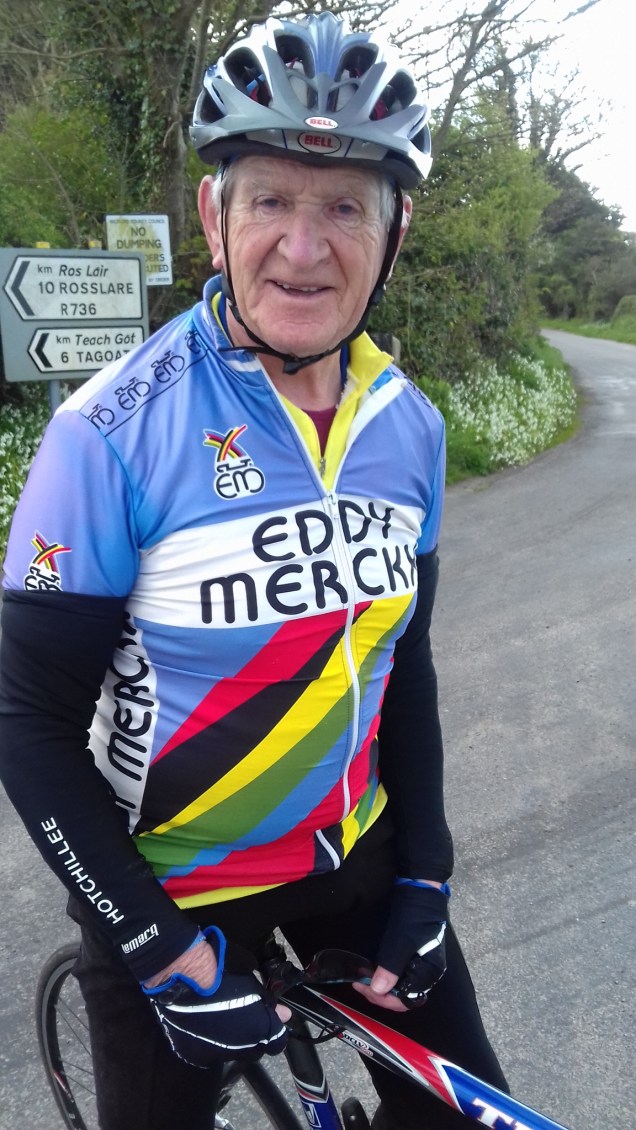
Bobby O’Dowd, now 83, still riding his racing bike daily. He cycled with the famous Roches and Kellys and bought one of Eddie Mercx’s bikes from him when they met many years ago.
The Kilmore Quay Tamar ALB is moored in the still busy, sheltered harbour. (A quick reminder that most Lifeboat Stations here pre-date the 100 year old Republic of Ireland and they remain part of the RNLI, usually with a long, distinguished history of saving lives at sea. You can read their brief history notes by clicking on each named Lifeboat Station link as you read. Almost all of them also have a Facebook page with regular postings of recent activity.)

Another 34Km to the very contrasting setting of Fethard ILB Station. As usual, all unpaid volunteers. Many thanks to Walter(LOM), Eoin(Helm) and Kevin(Crew) for turning out to welcome me. Three of Eoin’s great uncles were lost in the attempted rescue of the crew of the stricken Schooner “Mexico”.
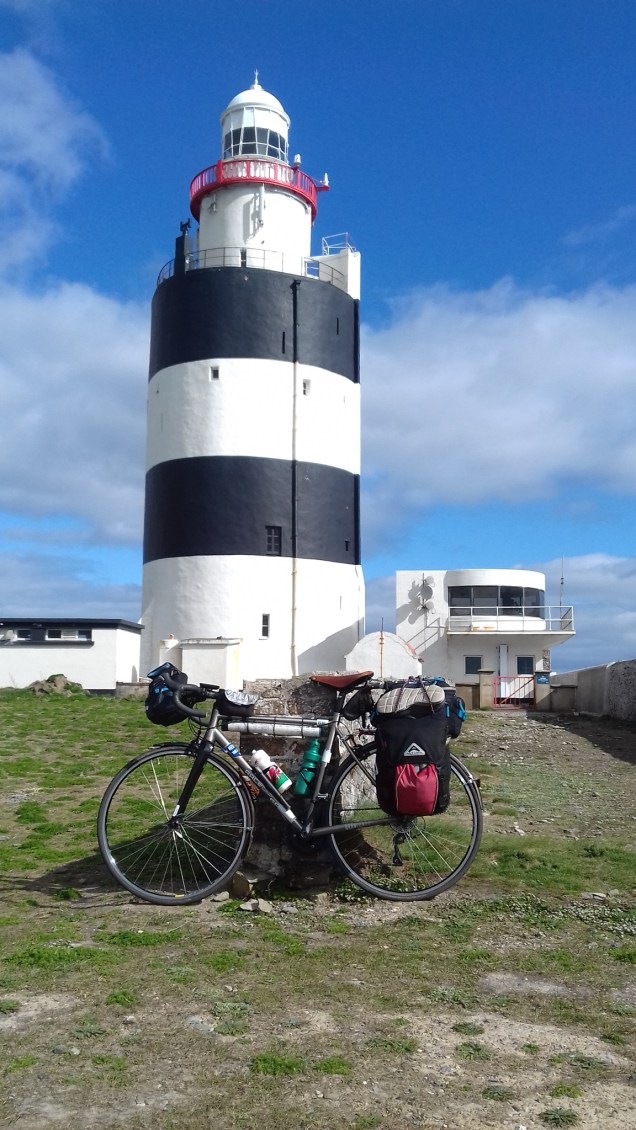
From Fethard, the direct route to today’s final destination would be just another 27Km. But Hook Lighthouse, the oldest lighthouse in THE WORLD still operating, is just a 16km detour down to the end of The Hook peninsula and back. Not to be missed.20170412_160943
Needless to say, by the time I reached Dunmore East I was well behind schedule.
But what a welcome from so many members of the local RNLI committee (mostly stalwart ladies plus a couple of crew)! Thank you so much Margaret, Carol, Liz, Carmel McAllister, Shirley and Eddie, for being there AND arranging accommodation at the very grand Haven Hotel, in such a beautiful setting above the harbour.
Today I have learned a lesson. You can’t rush through Ireland. The country is far too beautiful and the people much too friendly, interesting and interested. I might have to reassess my estimation of times of arrival and departure.

Ireland Ahoy!

It’s a hard life, out on the Irish Sea, eating a Jack Daniels glazed burger with sweet potato fries (courtesy of Stena Line), trying not to spill red wine on my bright new RNLI fundraising cycling Jersey.
But not as hard as it must be in a Lifeboat, trying to rescue the crew of a stricken trawler or leisure craft. Hats off to the 237 crews around the entire coastline of the UK and ROI. The vast majority are volunteers, totally dependant upon voluntary contributions to fund their training and all their kit, from yellow wellies to a state-of-the-art all-weather Lifeboat.
I now look forward to meeting more of these crew members from the 45 Lifeboat Stations around the beautiful Emerald Isle, now on my horizon.20170411_150936(0)

The final phase begins

Loaded up, with somewhere to go.  Ireland.

20170407_083240The last 2,000 miles beckon, around the entire coast of the Republic of Ireland and Northern Ireland, via the remaining 45 RNLI Lifeboat Stations.
Fondo is clean, oiled, fine tuned and ready to roll. Note the new orange T-shirt!

Since last year’s completion of the 5,300 mile circuit of all the non Irish bits of the British Isles, the legs have wintered well, thanks to fairly regular training rides. Some solo, some in the good company of my old friend and serious cycling buddy, Keith Graham.
Off to Fishguard next Tuesday, 11 April, for the Rosslare ferry. Many thanks to Carl, Fishguard Lifeboat crew and Port Manager, for arranging my passage with Stena.
Fundraising cycling resumes in earnest on Wednesday, with a 64 mile (that’s 103 km in Ireland) ride from Rosslare Harbour to Dunmore East, via Kilmore Quay, Fethard and Hook Lighthouse).
Just need to clear these last few timbers (brought down by storm Doris) from the garden and re-stock the log shed before I go.

The Isle of Man

Days 101-103  Mon 12 Sept to Weds 14 Sept.   It seems like an age since the last fundraising days around our southernmost British Isles in the balmy English channel. That’s probably because it was …  over six weeks ago!    Since day 100, I have enjoyed a good summer with my family and friends and caught up with much of the backlog of household maintenance & repairs in Bristol and Lowestoft.  With most people now back to work and school, (including my doubly excited grandson who is now a real schoolboy, in uniform and an expectant “Big Brother”), the time has come to tick-off the remaining Isle. That quite big one in the Irish sea. The one with three legs and a few top class pro-cyclists, including Mark Cavendish and Peter Kenaugh.   The Isle of Man.

I make no apologies for this lengthy three-day entry. With lots to report and plenty of time to write, this is the last you’ll hear for some time!

Monday. I now remember what I’ve been missing most about being on the road. It’s not just about being on the bike. It’s more about opportunities to have a good moan. So much scope for that today. Soon after getting up, but still before sunrise, my first thought of assault was on a FastTicket machine at Bristol Temple Meads. Yes it was fast, responding like a ticket clerk who’d been found dozing at his kiosk and prodded into sudden consciousness, the first couple of tickets were spat out pretty quickly. The screen then reminded me to WAIT FOR ALL YOUR TICKETS! I waited. And waited. It had clearly dozed off again. The tickets in my hand were sufficient to get me to Stafford on a Cross Country train but no further. A quick check on my booking confirmation email confirmed I had paid for a return to Liverpool Lime St., changing at Stafford. The fifteen minutes I’d allowed in a grown-up attempt to foresee the unforeseen were rapidly eaten up in a three-way debate between me, a ticket office clerk and the train manager for the 07:00 Bristol to Manchester (via my Stafford change) service. I would have to waste another 15 minutes of my time writing and your time reading this, to explain the details of my need for all the tickets purchased, including the free but “essential” bicycle reservation tickets, versus the ticket clerk’s suggestion that I buy more tickets from him at today’s premium price and claim it back later, versus the train manager’s opinion that he was running out of time for this. The latter’s suggestion that I just got on his train now and he’d give me a hand-written pass for the rest of the journey was the clear winner. With Fondo dangling vertically in the bicycle compartment of coach F, we set off at 07:00 precisely.

Four hours later, we were at Liverpool Pier Head Ferry Terminal, aboard the Isle of Man Steam Packet Company’s flagship Manannan, berthed alongside the very comforting view of the Titanic Memorial. With Fondo lashed to a safety rail down on the car deck I reclined in the passenger lounge above, listening to the Captain’s cheery welcome aboard announcements, warning of the gale force 7 to 8 gusts waiting for us out there on the Irish Sea.  The weather forecast had changed. Whilst the majority of the British Isles would indeed be enjoying the record high temperatures anticipated this week, the Isle of Man will remain wet and windy.  Let’s focus on something else. A quick look at the magnificent Liverpool skyline. Oh look! We’re right next to this city’s most famous landmark, the Royal Liver Building. Another monument to ships lost at sea. Or at least the cost of insuring against such maritime disasters.

Apart from the occasional rustling of paper bags, the retching of a few passengers still in search of their sea legs and the odd crash of crockery in the galley, the crossing was uneventful. As the not-so-stable-after-all Manannan lurched into Douglas Harbour, just 10 minutes behind schedule, I could see that the ride to the local All Weather Lifeboat Station was going to be a very short one.

Thanks Tony (Douglas ALB full-time Cox’n/Mechanic) and Don & Alex for the warm welcome, hot brew and guided tour of the Sir William Hillary Tyne Class all-weather lifeboat in the shelter of the old boathouse, plus the other fascinating anecdotes and local history. Sorry Tony, I didn’t get to the local Vampire’s Grave. Good luck with the plans for the new boat house and the new Shannon Class ALB.2016090912-douglas
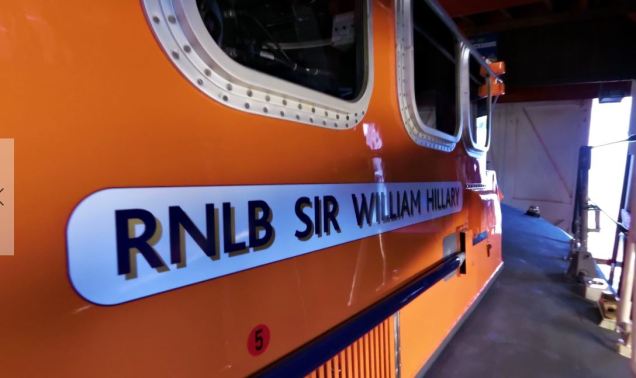
This is where the RNLI all began. The founder, Sir William Hillary had settled in Douglas in 1808. After years of witnessing countless shipwrecks and being involved in a number of rescues, he published (in 1823) a paper “An Appeal to the British Nation, on the Humanity and Policy of Forming a National Institution, for the Preservation of Lives and Property from Shipwreck”.  The following year saw the formation of the National Institution for the Preservation of Life from Shipwreck . Thirty-six years later, in 1860 the NIPLS was granted Royal Charter, becoming the Royal National Lifeboat Institute, a charity in the UK and Republic of Ireland.

Twenty-one years earlier, Douglas was one of the earliest places in the British Isles to be provided with a lifeboat.  One was sent here in 1802.  It was one of the 31 boats built by Henry Greathead, builder of the first lifeboat stationed on the mouth of the Tyne in 1789.

During the years 1824 to 1851 it is reported that 91 lives were rescued by the Douglas lifeboat (not included in lives rescued figures).  Sir William Hillary was awarded the Gold Medal as founder of the RNLI and won three other Gold Medals for gallantry.  His son Augustus won the Silver Medal.  One other Gold medal and 14 Silver medals were awarded.

A 16 mile, gently undulating ride along the south-east coast of the island to Port St Mary. Another cheery RNLI welcome, this time from Morgan (full-time mechanic), Mick (2nd Cox) and Martin (RNLI crew assessor, all the way from Larne).

1896  A station was established at Port St Mary by the Institution in view of the number of shipwrecks in the area.      1912  Committee decided the boat would in future be launched from the slipway and exercises with horses would be discontinued.  Gas laid on in lifeboat house for lighting and heating.

The inter-war years were not the luckiest for Port St Mary crew, especially when still ashore:

1927  An exercise was arranged for Flag Day on 6 August.  Coxswain Kneen was killed by an explosion, when he fired the maroon that was to open the event.  His wife was granted a pension by the Institution.      1937  While launching on exercise on 10 June the lifeboat skidded down the slipway and four men working the winch were thrown from the handles.  John Evans was struck by a handle and received fatal injuries.  A pension was granted to his widowed mother.

A little more recently:   2004  A Framed Letter signed by the Chairman of the Institution, Mr Peter Nicholson, awarded to Second Coxswain Michael Kneale in recognition of his initiative, leadership and first class seamanship when the lifeboat brought in the large disabled fishing vessel Paramount on 24 November 2003.

A short (2.5mile), wet dash in fast fading light across to The Falcon’s Nest in Port Erin for my first night on the Isle of Man. Thanks Morgan, for the recommendation. Good food, fine beer (Bushy’s Ale of Man) and a comfy bed.

Tuesday.  Port Erin Lifeboat Station was not the building I first thought. From a distance (about 400 yds as the Falcon flies), it couldn’t be anything else but a Lifeboat Station. Even as I approached the familiar solid old stone building with typical RNLI deep gloss painted doors, I still assumed it was. Well, it was (once) and it isn’t (now). It turned out to be an ex Lifeboat Station, now converted to public lavatories. Then I remembered, I’m supposed to be looking for a white-painted, flat-roofed, 1920s concrete block building with a small 1990s extension. There it was, just around the bend. An Inshore Lifeboat Station with an Atlantic 85 IRB. I’d contacted Paul (Retained part-time RNLI Mech) well in advance. Thanks for being there Paul, with the kettle on. It turned out to be quite a busy morning, with another Tony (ILB crew) in attendance, due to meet Martin (from Larne) for crew assessment.

Port Erin Lifeboat has, like most lifeboat stations, a long and distinguished history of many brave rescues. But I have to confess to being particularly drawn to these few monetary references.

1884  Lifeboat house constructed at a cost of £250.      1900  Slipway constructed at approximate cost of £1,000.

1970  Bronze Medal awarded to Coxswain Maddrell BEM and a £5 monetary award to the coxswain and six remaining crew members for their service to the coaster Moonlight which foundered off Bradds Head in a south south-westerly gale, very rough sea and poor visibility on 9 September 1970. 

1993  The 37ft Rother class lifeboat Osman Gabriel, stationed at Port Erin from 1973 until June 1992 was sold to the Estonian Lifeboat Service (Eesti Vetelpaasteuhingu).  Funding was inevitably difficult and the British Embassy in Tallin was approached for assistance.  As a result, the Foreign Office agreed to the ambassador’s recommendations that funds would be made available to buy the lifeboat from the RNLI.  The lifeboat joins five rescue cruisers which are already part of the Estonian lifeboat service fleet.

1996  Two-storey extension to the boathouse constructed.  Facilities include a souvenir sales outlet, an office and improved crew facilities. Cost not disclosed.

2006  Slipway and boathouse adaptation completed in June at a cost of £304,408.

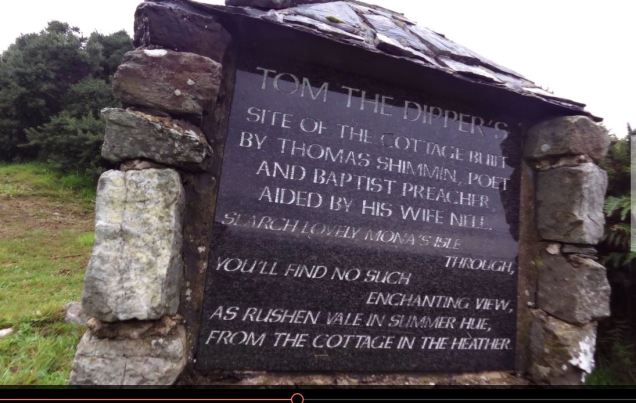
With the rain now more noticeable by its absence, time to leave Port Erin and head north along the west coast towards the next destination, Peel. This coastal route includes climbing “The Sloc”, considered by locals to be quite a challenge. It was. The long climb starts immediately north of Port Erin. After just a couple of miles of climbing, a lot of height had been gained. Over-the-shoulder glimpses of views back down, looking south were stunning. Worth a moments rest just before entering the fast approaching cloud base. A small, isolated memorial garden on the left, complete with bench, was too tempting. It turned out to be “Tom the Dipper’s”, the site of the cottage built by Thomas Shimmin, Poet & Baptist Preacher, aided by his wife Nell, with this inscription:            Search lovely Mona’s Isle through/You’ll find no such enchanting view/As Rushden Vale in summer hue/From the Cottage in the Heather.   20160913  The view to the south was indeed quite special, with the mid morning sunrays through broken lower clouds, spotlighting parts of the dappled low land down to the coast at Port St Mary and Port Erin, the sea itself being a full monochrome range of greys, from the most dazzling silver to dark gun-metal shadows. The reference to “..lovely Mona’s Isle..” took me back almost 50 years to my late school days in Holyhead. Mona’s Isle being Anglesey, where we used to scramble to the top of Holyhead Mountain on a good, clear day, to search for a glimpse of Ireland to the west, Snowdon (much closer) to the south-east and if we were really lucky, the Isle of Man to the north. Alas, no such reverse view of anything Welsh to the south today, apart from Fondo’s Welsh Dragon water bottle. But being only half way up this climb, maybe from the top …? Not today. Turning back to look north, my winding road climbs into the cloud just a few yards ahead. 20160913-sloc2Soon, the heavy cloud base looked set to burst at any moment. And rain it did, for the rest of the day. Up and up to the top of the Sloc. Thick fog and heavy rain aren’t often experienced together. Was I witnessing the formation of raindrops from within a rain cloud? Thankfully, the very few cars on the road were well lit and moving slowly enough to spot my hi-viz pack-a-jack and flashing led lights. The poor visibility and wet roads tempered my urge to let rip on the way back down to Peel.
Peel All Weather Lifeboat Station is another hefty, but discreet solid stone structure, nestling in to the natural rock and man-made stone walls in the shadow of Peel Castle. With its huge doors folded back, the boat house looked more like a coastal cave, the perfect shelter for its off-duty occupant. Despite its well proven ability to ride the roughest of stormy seas with its tough deep blue & brilliant white hull and secure orange superstructure, the majestic old Mersey Lifeboat looked as if it was quite happy to stay under cover on this dull, wet day. Thanks to George (relief mechanic, with a relief Mersey), Fondo & rider were very relieved to be invited to join him. Paul, the regular Cox’n/mechanic, was away in North Wales, with Peel’s own Mersey ALB, the Ruby Clery, receiving some Welsh TLC in a Conwy boatyard. i.e., the boat, not Paul.  George didn’t elaborate on that but he did make us a nice cup of tea before taking us across to The Marine, where Mickey (crew) is also the landlord. Many thanks to the Peel crew, mostly in their absence but in the good company of George, Casey and Mickey for treating me to lunch. Thanks also to Joe, who popped in to see George whilst I was at the boathouse earlier. On hearing of my fundraising efforts, Joe apologised for not carrying much cash but emptied his pockets and insisted on donating all his loose change to the cause. Who needs sunshine to brighten your day when there are the good folk of Peel to warm the cockles?20160913-peelAgain, looks can deceive when it comes to the historic lifeboat buildings of the Isle of Man. The solid granite walls and crow-stepped gable of the Peel Lifeboat Station, matching the adjacent Castle (originally a place of worship before becoming the fort of Magnus Barefoot, an 11th century Viking King of Mann), are not as old as they appear! :-
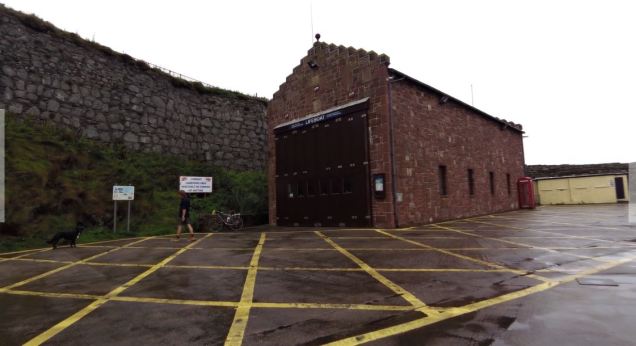
1885  Lifeboat house constructed at a cost of £500.

1992  New boathouse was constructed on the existing site of the previous house after it was found to be insufficient in size to accommodate the station’s new Mersey Class lifeboat.  The new boathouse as well as housing the new lifeboat and tractor includes a workshop, souvenir outlet and improved crew facilities.  Atlantic 21 lifeboat withdrawn and replaced with a Mersey Class lifeboat on 10 June, establishing an all-weather lifeboat station.

1995  The Thanks of the Institution inscribed on Vellum was accorded to crew member Frank Horne in recognition of the courageous personal risks he took when he was transferred from the lifeboat Ruby Clery to the swamped fishing vessel Three Sisters and pulled three people to safety as the vessel suddenly rolled over and began to sink, 20 miles north-west of Peel in moderate seas on 17 October 1994

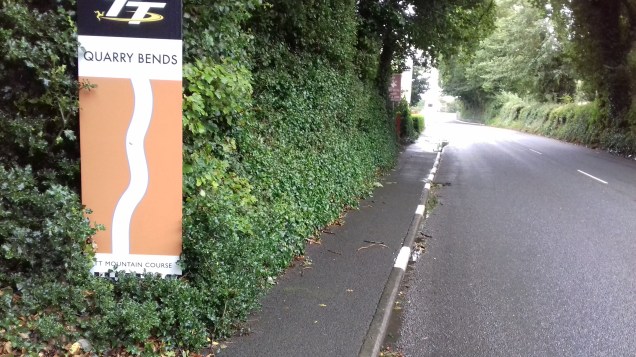
As the afternoon rain began to ease a little, the prospect of leaving the comfort of my warm, dry Marine bar stool became just a little easier to face. With the inevitable climb from a sea level harbour forcing me to spin my legs in a high gear, it was easy enough to stay warm. What I hadn’t realised earlier was that I had been cycling along part of one of the road racing circuits on the island. For motorcycles, not pedal cycles. However, it was now quite obvious that I had joined the most famous circuit of them all, the Isle of Man TT Snaefell Mountain Circuit. Much of this year’s extra TT (Tourist Trophy race) street furniture was still in place, including padded barriers, advertising banners, temporary road signs with names of familiar features and hazards, like bends and humped back bridges, around and over which racing motorcyclists have flicked and flown their machines almost every year since 1907. 20160913_153116Joining the circuit at Douglas Corner in Kirk Michael, I pedalled on through Birkin’s Bends, over Ballaugh Bridge, Quarry Bends and on to the Sulby Straight, half way along which was my bed for the night at the Sulby Glen Hotel. Thanks for the recommendation Ali (Ramsey ALB Station, tomorrow’s destination). Much quieter now than in the early summer TT season but still a good atmosphere. Walls adorned with photos & other motorcycling memorabilia, great food & drink and a very comfortable en-suite room for very little money.
Wednesday.  No rain! An earlier start, on the road by 8.00am.  Decided to go the long way around to Ramsey, heading north via St Jude’s, Andreas and Bride to the northernmost tip, the Point of Ayr Lighthouse. Having now seen most of the coastline of the British Isles, I cannot help at times, noticing similarities and being reminded of particular sections of the first 5,400 miles of coast roads recently cycled. Today, as I approached the remote northern tip of the island with the sun on the flat acres of coastal heather and bracken I was reminded of Dunwich Heath in Suffolk. Yesterday, as I crested a very high brow above cliffs on the mid western edge of this island, I thought for a moment that I had just climbed Countisbury Hill once more, where Dartmoor tumbles down over the edge of the North Devon coast. Meanwhile, back at the Point of Ayr Lighthouse, time for a couple of photos before turning south and heading for Ramsey.20160914_091547

Ramsey All Weather Lifeboat Station, home (for another year or two at most, until the inevitable Shannon replacement) to another beautifully maintained Mersey Lifeboat. This one, the Ann and James Ritchie, has just celebrated its 25th birthday. Since the establishment of the first Lifeboat at Ramsey in 1829, this station has recorded a most impressive history of saving lives at sea. A long list of some of the rescues and other events can be seen by clicking on the history tab at the bottom of the Ramsey pages of the official RNLI website. Here’s a wee taster for now:

1887  Lifeboat was out on service twice on 1 November 1887 in a sea and a storm the like of which the honorary secretary stated had not visited the coast within the memory of man.  On returning some of the ropes attached to the drogue broke because of the great strain and the boat broached to and filled.  The crew righted her and all regained the boat without loss of life.

1942  Bronze Medal awarded to Coxswain John Comish for the rescue of the crew of 13 of the Aberdeen trawler Strathairlie that ran ashore on a very dark night in a strong south-south-easterly wind at Skellig Bay on 20 November 1941.  In a heavy on shore sea it was impossible for the lifeboat to get alongside the casualty so Coxswain Comish anchored, dropped down on his cable, and managed to get two lines on board the casualty, then hauled on these lines just far enough for a man to jump aboard when a sea had passed, and hauled out again on the cable before the next sea.  Thirteen times he took the lifeboat alongside the trawler in this way and was successful in rescuing the crew of 13.

1986  The Thanks of the Institution inscribed on Vellum accorded to Coxswain James Kinnin in recognition of the skill, leadership and determination he displayed when the lifeboat rescued 14 people and saved the yachts Airy Fairy, Billy Whizz and Broadaxe which were in difficulties in North Ramsey Bay in a south-south-westerly storm and very rough seas on the night of 25/26 May.20160914_105759
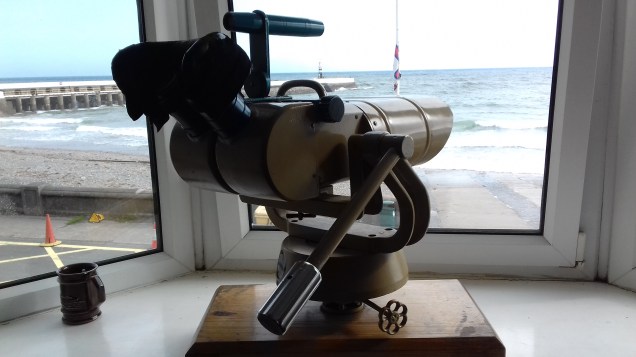
Thanks again to Ali (full-time Cox’n/Mech), for the tour of the Ramsey Lifeboat, the welcome cup of coffee, allowing me to play with the WW2 binoculars and for the ceremonial signing of the chart. This moment marks the 193rd and final RNLI Station to be visited around the entire British Isles …. leaving just 45 more stations and about 2,500 more miles around the coast and on the loughs of all of Ireland.

The Channel Isles

Days 98 to 100  Thurs 14 to Sat 16 July: At last. After a few postponements in recent weeks, we’re clear to go. This is no solo effort. Not just cycling. First, I have to get there. Super Fly-Bro Neil has spotted a clear, three-day weather-window ahead. A crack-of-dawn, cross-country dash to the ex WW2 RAF Finmere airfield near Bicester, where Sportcruiser G-CFNV is based. Re-fuelled and ready to fly.   [NB  – must remember to top-up this key-pad with hyphens]

More magical moments in the air. Heading south, above the many shades of green and pleasant land. A few small candy-floss clouds at our altitude. Just enough to play with, not enough to obscure views of landmarks. Oxford spires, Didcot Power Station (soon to be demolished), Winchester Cathedral (Bowdy-O-Doh, not to be confused, as I was, with Mouldy Old Dough), Southampton, Isle of Wight and many miles of clear blue sky over clear blue water. In a small, single engine, white & pale blue aircraft. Worried about engine failure? Not really. Been there & done that years ago. This motor’s as smooth as a smooth thing. Same cool, capable pilot. Different, better aircraft. Mind you, that was a few hundred feet above a huge, flat field. This is a few thousand feet over open sea. Something to occupy the mind, focus attention on the array of gauges in front of me and the potential rescue boats below. Pressures, temperatures and levels AOK skipper. A busy shipping lane below. Ditching drill. I don’t recall a bored stewardess pointing at doors and dangling an oxygen mask before take-off. Neil reassures me he’d aim for a point ahead of the smallest vessel, rather than a huge tanker or ocean liner that would need half a day’s notice to stop and turn around. Life jackets & harnesses secure. Remember which clasp to unbuckle after ditching. Rumour has it, this rigid, low wing, metal skinned light aircraft should stay afloat long enough to allow us to open the canopy and climb out onto the wing. Assuming that is, that this pilot manages to gently and slowly ‘air stall’ onto flat calm water, maintaining the structural integrity of G-CFNV. Must quickly erase that black & white image of a badly aimed Kamikaze Zero hitting the ocean at 300 mph, a few feet short of its targeted battleship.  An ironic concern: Have I raised enough money to cancel out the average cost incurred for one RNLI Lifeboat launch & rescue?  No worries,  Land Ahoy!

Russ, the solution to the problem of being all kitted out, with the exception of a bicycle (no room in a two-seater cockpit), who runs Pedal Power bike shop in St Helier, Jersey’s main town, met us at the airport.  A moment of sadness, missing Fondo, which soon passes when a black & yellow Boardman carbon fibre road racing bike is wheeled out and passed to me. Most bike owners instinctively feel the need to lift a new racing bike off the ground, usually with one little finger, then laugh incredulously at its feather-weight properties and make a ridiculous comment on its comparative weight. Sadly, I am no exception to this strange behaviour. This complete bicycle weighs about the same as the extra pair of yellow socks I rejected from my panniers on the grounds that they were unnecessary extra weight. Neil is equally impressed with his bicycle for the day, a Swiss BMC light alloy racer. Considerably lighter than his own well sprung, bouncy hybrid but I notice a slight tinge of concern as my brother eyes the narrow racing saddle, drop handlebars and combined brake/STI gear shifters. Hot on the heels (or back wheel) of Russ as he guides us through the surprisingly busy town, to our first stop in the harbour, St Helier Lifeboat Station.

1825  Gold Medals were awarded to Francis De St Croix, Jean De St Croix, Philip De St Croix and a Silver Medal to Philip Nicholle for rescuing 13 people from the ship Fanny on 9 January. Five people drowned.       1940  During the German occupation of Jersey in 1940–1945 the station was not under the RNLI’s control; it was reported that the lifeboat, with a crew of German guards, had rescued 35 people.      1948  A new lifeboat, the first to have a deck cabin, was sent to the station and placed on moorings in the harbour. A German-built bunker on Albert Pier was taken over and converted for the crew      1995  The Thanks of the Institution Inscribed on Vellum was awarded to Coxswain Robert Vezier for rescuing 55 of the 307 people onboard the passenger catamaran Saint Malo, which had struck a submerged object and was sinking in rough seas off the Corbiere lighthouse on 17 April.

Thanks to Rhees (St Helier Station Mechanic) for the kind welcome, coffee and brief chat before we had to dash off. The plan now slightly modified to fit in with a BBC Jersey radio interview back at this venue this afternoon, so no time to waste if St Catherine  ILB Station is to be visited today. Back on the road, we three cyclists (almost enough to make up a mini peloton) set off at a pace not too fast to take in the coastal scenery but fast enough to reach St Cat’s, spend the right amount of time there and get back to St H in time. I must commend my not-so-regular cyclist brother for:  a) maintaining the pace set by Russ, a serious road-racer and    b) coming up with a clever scheme to linger longer at St Cats with Nigel (LOM) and Andrew (Sen.Helm), thus avoiding the stitch & cramp inducing sprint back.  St Catherine’s Inshore Lifeboat is one of the more recent RNLI Stations.

1969  The RNLI established an inshore lifeboat (ILB) station with a D class lifeboat and the ILB was housed in an old wartime bunker in the cliff.   1989  Trials were carried out in October using a B class Atlantic 21 lifeboat and a DoDo (Drive on-Drive off) launching trolley.    1990 The C class lifeboat was withdrawn and an Atlantic 21 lifeboat was sent to the station on 15 October.     

1991  An old farm building was modified to provide crew facilities and accommodation for the Atlantic 21 lifeboat and launching tractor.

1994 In darkness on the night of 1 January the ILB crew rescued a surfer who was clinging to his board in strong winds and driving rain off Plemont. The Thanks of the Institution Inscribed on Vellum was awarded to Senior Helmsman Nigel Sean Sweeny and Framed Letters of Thanks were awarded to Crew Members Paul Richardson and John Heyes.  HRH The Duchess of Kent presented these awards during a visit to the island on 31 October.    1995  The Walter and Elizabeth Groombridge Award was awarded to Senior Helmsman Nigel Sweeny and Crew Members Paul Richardson and John Heyes for the above service on 1 January 1994

The mad dash sprint back to St H was a bit quicker than my usual touring pace, helped by the unladen Boardman bike and by draughting Russ for 90% of the ride, with little more than a fag paper’s gap between my front & Russ’s back wheel. Good job Russ never uses his brakes.The Charlie McArdle live-streamed video & radio interview seemed to go well (who am I to judge?). The planned back-drop of the big orange Tamar Class St Helier Lifeboat was made all the more dramatic by its absence. Five minutes before I returned, Rhees and crew had received a shout, called on emergency service to assist a yacht in difficulties, drifting towards semi submerged rocks on an ebbing tide. Which meant that James, the LOM (Lifeboat Operations Manager) was now on site, having dashed down to authorise the launch. So much for the relaxed, slower pace of life expected on the Channel Islands. At least we could now take the rest of the day off. Bikes returned to Pedal Power, where we watched the last dramatic moments of Stage 12 of the Tour de France, witnessing the never to be forgotten image of Chris Froome running up Mont Ventoux, all kitted out, with the exception of a bicycle. Then on to The Harbour House in picturesque St Aubin, our destination for the evening. Many thanks again to Russ, who was able to join us for dinner at The Muddy Duck and entertain us with his very convincing conspiracy theories related to the world of Pro-Tour Cycle Racing. Now I know how he managed to accelerate away from me on the last hill with no effort and why there was an extra little switch on the gear selector.

Friday 15 June: A day of Island hopping. Another thank you, this time to Graham, fellow guest at the Harbour House, for the lift back to the Airport. A short flight to Guernsey, where we were met by Carl (St Peter Port LB Mechanic) with two bicycles, his own plus one belonging to Buz (St PP Cox’n). This time, of the mountain bike variety. No mountains on Guernsey but I’m not complaining. I wasn’t sure how pleased Neil was, to discover that he too would be cycling again today. Within less than a mile I found out, when my bicycle suffered a rear tyre blow-out. Neil’s gallantry and quick-thinking was faster than Geraint Thomas giving up his bike for Skye Team Leader, Chris Froome in this year’s TdF. Before I knew it, I was on his bike and Neil was in the team van with Carl. How selfless was that?

Not as busy as St Helier, but still much more traffic than expected on Guernsey. St Peter Port Lifeboat, a Severn Class ALB was eventually located in the main harbour. Many thanks to Carl and Buz for the welcome, the 187th signature, the refreshments and loan of the bikes.

1803  The first station on the island was established at St Sampson’s with a lifeboat built by Henry Greathead

1940  During the Second World War St Peter Port lifeboat went to Jersey to meet with the St Helier lifeboat as both were to be evacuated to England. On the way she was machine-gunned by three German aircraft and a member of the crew, the coxswain’s son, was killed. Both boats fell into German hands.

1963  The RNLI’s highest accolade, a Gold Medal, was awarded to Coxswain Hubert Petit, Bronze Medals to Motor Mechanic Eric Pattimore and John Petit for rescuing the nine crew from the motor vessel John Collett. Thanks of the Institution Inscribed on Vellum were awarded to the remaining members of the crew.

2008  The lifeboat rescued the crew of three of the fishing vessel Guyona on 24 June.  The service was initiated by the activation of the RNLI’s new and unique MOB Guardian system, and this was the first use of the system in a real emergency.

2009  A Framed Letter of Thanks signed by the Chairman of the Institution, Admiral the Lord Boyce GCB OBE DL was awarded to Coxswain Anthony White in recognition of his seamanship, boat handling skills and determination during a service in the early hours of 5 October 2008.  The large sail training vessel Alva had suffered a fouled propeller and rudder.  Despite south-westerly force 7 to 8 winds, gusting at times to 45 knots, 6 to 9 metre seas with a 7.5 metre swell a tow was established and the Alva brought to the safety of St Peter Port.  Coxswain White’s crew received a collective Letter of Appreciation from the Chief Executive in recognition of their teamwork and efforts.    2010  Her Majesty The Queen, honoured Coxswain Buz White in her Birthday List by making him a Member of the British Empire (MBE).

The last, but not least (just smallest) of the three main Channel Islands to be visited is Alderney. A lot smaller, a lot quieter, with very little evidence of modern development. Many thanks to Brian (Station Mechanic) for the great welcome to your fine island. A place to escape from the high speed pace of life, with great beaches, wild-life reserves, fascinating historic sites, all within walking distance. Many islanders however, do have a car. Seat belts and MoT tests are not required. Following the ceremonial 188th signing of the chart and the praising of the Alderney Trent Class Allweather Lifeboat in Braye Harbour, Brian took us to the local inn, The Divers. Here, a fellow Clan member was waiting to meet us. The Lifeboat Operations Manager, Braye Fishmonger and general pillar of the community, all rolled into one character – David (Bugsy) McAllister. A few other crew, young & old, were also introduced. A great atmosphere, enhanced by good company and well kept draught beer (and ice cold soft drinks for those crew members on standby).

1869 Alderney Lifeboat Station established. Lifeboat house constructed at a cost of £235.

1876  The stone quarry in which the lifeboat house stood was being reworked and a new one was being opened not far from the front of the boathouse.  The working of the latter, it was feared, would considerably damage the roof of the boathouse.  Great inconvenience was caused in launching the boat on account of the rails that were laid down on the way from the boathouse to the slip on the breakwater where the boat was launched.  The Assistant Inspector reported that he thought a better site for the boathouse could be obtained near the Arsenal on the other side of the harbour.    1877  Difficulty in getting the contract for moving the boathouse owing to scarcity of labour.     1884  With the difficulty in obtaining a crew, as so many fishermen had left the island, the lifeboat station was closed and the lifeboat was transferred to St. Helier.

1984  A 33ft Brede class lifeboat Foresters Future sent to station in January and placed on service on 10 March for a 12 month operational evaluation period.    1985  The Duchess of Kent officially opened the station on 10 May.  She presented the Thanks of the Institution inscribed on Vellum to Mr John Kay-Mouat, President of the States of Alderney,  for the life-saving work carried out by private boats in Alderney during the 100 years in which there was no lifeboat on the island.

1992  Bronze Medal awarded to Helmsman Philip Murray and a Framed Letter of Thanks signed by the Chairman of the Institution awarded to each of the two crew members, Francois Jean and Wayne Chandler, for attempting to save a girl, even though the inshore lifeboat was severely damaged, after two girls and a man was swept into the sea at the Fort Clonque causeway on 9 August 2002.  The inshore lifeboat saved the man.  Crew member Mark Gaudion and Station Honorary Secretary David McAllister rescued the girl by crossing the causeway to reach her despite the strong pull of the tide.  They were tied to a line held by policemen and others.  They were both accorded the Thanks of the Institution inscribed on Vellum

Weds 16 July: Back to Blighty, via a fascinating detour to Cherbourg, where the occasional fox and hare enjoy playing chicken, trotting and bounding out from the cover of unmown airfield grass across the large tarmac runway in front of landing aircraft. As caught on video.

Thank you so much big brother Neil, for making these islands an unforgettable part of the big adventure. Thanks also to Russ of Pedal Power for the loan of the amazingly fast, lightweight bikes and being such a great local guide. And of course, huge thanks to all the awesome RNLI crew members on these Isles for such a great welcome. A privilege to meet a good number of you between shouts around the notoriously treacherous waters surrounding these islands.

I hope you’re all watching the BBCTV (Weds evenings) series Saving Lives at Sea. If not, catch up on iPlayer.

The Lizard to Pendeen, Newlyn

Day 97  Weds 6 July:  A milestone day.  After today’s short ride from the Caerthillian, down to The Lizard Lifeboat Station at Kilcobben Cove, back up to Lizard village, around Mount’s Bay via Porthleven, Marazion and Penzance, and back to Penlee Lifeboat Station in Newlyn harbour, there will be no more coastal Cornish, English, Welsh or Scottish miles to do. This last link will close the chain around the big island. The next (and last) 27.1 miles of coast roads require no route planning nor map reading. Not just because today’s is a straightforward application of my Keep the sea on your left and don’t stop pedalling” mantra.  I have cycled and driven them before. But they must be done again today, to complete the clockwise circumnavigation in the correct order, on this bicycle. On Fondo.

No post-breakfast climb today. Free-wheeling through the fresh, cool morning air, down from the village towards Church Cove. Fork right after the Church, over the cattle grid and up the new access road. Fondo will have to be left at the top of the cliff in the LB Station car park. The new boat house is way down below, reached via a long, steep flight of steps. Or, if I’m lucky and manage to time it right, a ride in the special access lift.  I’m lucky. John (DLA) turns up with a key to open the cage and operate the not-quite-vertical, non claustrophobic electric lift. It reminds me of the funicular railway that links Lynmouth with Lynton, but steeper and in a fresh air cage instead of a glazed wooden gondola.  As first seen on the North Cornish coast at Padstow’s ALB Station, Trevose Head [Day 2], the new Lizard boathouse is in the now familiar early 21st Century architectural style, with its rolling wave form and copper roof, protecting the rigid curved glu-lam wooden beams over a large, airy interior. Big enough for the lovely Rose, the slip-launched Tamar Class Allweather Lifeboat. This is the latest in an ever evolving series of upgrades and improvements in the battle against the challenging waters around the rocky Lizard peninsula.

1859   A Silver Medal was awarded to Mr John Ridge for rescuing 18 people from the schooner Czar.  The first Lizard lifeboat station was established by the RNLI at Polpeor following this rescue and a boathouse was built at the top of the roadway leading down to Polpeor Cove.

1866   Coxswain Peter Mitchell and Crew Members Richard Harris and Nicholas Stevens drowned when the lifeboat smashed onto rocks during a hurricane.    1867  The RNLI established a lifeboat station at Cadgwith.

1907   Silver Medals were awarded to Coxswain William Edward Mitchell and Second Coxswain Edwin Mitchell (Lizard lifeboat), and to Rev Henry Vyvyan, Coxswain Edward Rutter (both Cadgwith lifeboat), George Anderson and William Williams (both crew of the liner Suevic) for rescuing 394 people from the White Star liner Suevic in dense fog when it struck the Marnheere Reef off The Lizard. Coverack and Porthleven lifeboats also rescued 62 people.

1914   A new boathouse was built at Polpeor Cove for the station’s first motor lifeboat.

1941   The lifeboat Guide of Dunkirk was one of the 19 lifeboats that helped to evacuate the British Expeditionary Force from Dunkirk. After Dunkirk she was sent to Cadgwith station.

1958   The Lizard (Polpeor) station was extremely exposed and, in certain conditions, launching lifeboats here and at Cadgwith was a difficult and dangerous operation. It was also considered that this important area for shipping warranted a larger lifeboat than could be operated from either The Lizard or Cadgwith. The RNLI therefore decided to build a new station at Kilcobben Cove, lying half way between the two stations.   1959  A Centenary Vellum was awarded to the station at Polpeor.     1961  The original station at The Lizard (Polpeor) closed.  The boathouse and roller slipway at Kilcobben Cove were completed. The new station was opened on 7 July 1961 by HRH The Duke of Edinburgh. The station became known as the Lizard-Cadgwith lifeboat station.   1963  The Cadgwith station closed.

1967   The lifeboat launched on 28 May to welcome Sir Francis Chichester home after sailing single-handed around the world.    1979  A special framed certificate was awarded to the Coxswain and crew for their services to several yachts in difficulties during the Fastnet Race on 15 August.

1987   The station’s name was changed to The Lizard.    1988  The boathouse was adapted for the new Tyne class lifeboat. ON-1145 David Robinson was placed on service in August.

2011  The Tamar class lifeboat Rose was placed on service on 16 July, funded by an anonymous donation from a charitable trust.     2012  The new boathouse was opened on 5 May.

Many thanks to John (DLA) for the ascent/descent, Ned (LOM, Ex RN SAR) for the valued autograph and Dan (Station Mechanic) for the ice cold drink and tour.

Next stop: The boating lake cafe on the Helston-Porthleven road for the planned rendezvous with Patch Harvey, the Penlee Lifeboat Cox’n. Way back on [Day 1], Patch suggested that if&when I ever make it all the way around the coast, he’d join me on his bike for the last leg from The Lizard. A keen cyclist and man of his word, here we are on the ‘home run’ back in to Penlee. Thanks Patch. Great to be cycling in the company of a local lifeboating, fishing and sporting legend. Or should I just say some bloke in a Lantern Rouge/ ‘Fat Bloke At The Back’ cycling Jersey?  Whichever you prefer. Thanks anyway, for pacing me back via Porthleven, the stunning views across Mount’s Bay from Rinsey Head and down through Marazion & Penzance to your Penlee Lifeboat in Newlyn Harbour. According to Garmin, not counting the resurfacing hold-up near Rosudgeon, we averaged 16 mph into the usual headwind. Not exactly Tour de France peloton pace, but a lot faster than my overall solo average around the coast.

A great big thank you to Claire, John& Nicky, Phil & Carol, Neil, Nick and Jim, the welcoming party who’d travelled from various corners of the country to cheer me in to Newlyn.  I suppose Neil wins the ‘greatest distance travelled’ award, even though he cheated by flying most of the way. An equally big thank you to Elaine (Penlee LPO), Patch (Cox’n), Tony (Mech) and whoever it was (?) who covered for Patch this morning, for putting up with and looking after the McAllister & Co invasion. This time, with more celebratory fizz on an almost empty stomach, I kept my mouth firmly shut. Until the pasties arrived.

The Penzance area has been host to a lifeboat for 213 years. For a potted history of the Penzance, Newlyn and Penlee Lifeboats take a look at the history tab at the foot of this link. Here’s an account of just one particularly busy day in the life of a 19th century Pezance Lifeboat:

1867   Silver Medal awarded to Samuel Higgs Jnr for three services in Mounts Bay in an east-south-easterly gale and very heavy sea 5 January 1867.  After a distress signal was seen the lifeboat launched and found the Brixham schooner Salome drifting rapidly towards shore, five men and a boy were taken off just before the casualty stuck the rocks and broke up.  More signals were seen in the pitch dark evening with a hurricane now blowing and in heavy rain the lifeboat launched again and returned within an hour having rescued the crew of five from the Looe schooner Selina Ann.  The third time the lifeboat launched was to the Teignmouth schooner Hairess when she rescued six people.

Sadly, the term Penlee Lifeboat is still synonymous with the name Solomon Browne, well within living memory for most of us.

1981  On 19 December the lifeboat Solomon Browne was launched in hurricane conditions to go to the aid of the coaster Union Star that had engine failure and was being swept towards the southern coast of Cornwall.  The coxswain repeatedly took the lifeboat alongside the coaster to try and rescue the eight people on board, before managing to take four people off.  A helicopter was unable to get a line to the people on the coaster.  The lifeboat made a further attempt to rescue the remaining four when radio contact was lost.  It was subsequently discovered that the lifeboat had been completely wrecked with the loss of her crew of eight.  The coaster was also lost.  There were no survivors.  Coxswain William Trevelyan Richards was awarded the Institutions Gold Medal for the manner in which four people were taken off the coaster.  The remainder of the crew, Second Coxswain/Mechanic James Stephen Madron, Assistant Mechanic Nigel Brockman, Emergency Mechanic John Robert Blewett, crew members Charles Thomas Greenhaugh, Kevin Smith, Barrie Robertson Torrie and Gary Lee Wallis were awarded Bronze Medals.  The Medals were presented to the widows and parents by HRH Princess Alice, Duchess of Gloucester at the Royal Festival Hall, London on 11 May 1982.  The Institution paid pensions to the dependants of the lifeboat crew in accordance with its usual practice and a local appeal raised over £3 million


Falmouth (Penryn) to The Lizard, via RNAS Culdrose and St Mary’s (Isles of Scilly)

Day 96  Tues 5 July:  Many thanks to Nick, Floyd, Louis and Fran for inviting me to stay with you in your big blue Penryn house last night. A lovely bunch, great family team, top quality home cooked curry. Thanks again for making me feel so welcome. Hope to see you in Bristol next time you visit your Uncle David?

The now familiar post breakfast climb, this time up Hillhead Road towards Constantine, was one of the more severe, rapid height gaining starts. But as I move west towards the regular haunts around Mounts Bay, this territory becomes increasingly familiar. Great place names. From the top of the climb near Treverva, down to Brill, up & down again to Gweek. Don’t cross the Helston River towards Goonhilly! Up to the Culdrose plateau for the rendezvous with brother Neil, who has been allowed the privilege of landing his civilian light aircraft at the busy, active Royal Navy Air Station. Just to pick up his younger brother. Some RAF and RNAS bases have a long history and close association with the RNLI, making string pulling a bit easier. Many off-shore and coastal search & rescue operations have been carried out jointly, with their helicopter crews regularly exercising with local Lifeboats. In early 1968, as a young Air Cadet, before joining the RAF ‘for real’ I had the pleasure of being winched up into a Wessex helicopter of 22 Sqdn SAR, RAF Valley as part of an air crew training exercise. A most electrifying and memorable experience, mostly because I didn’t listen properly to the instructions. Having been told to ‘play dead’ and not to assist the winchman, I let him wrestle me into the yoke. The incredible noise, down-draught and then the sudden lift was too much for an unconvincingly dead cadet. I instinctively raised my not-so-limp arms and grabbed the winch cable above the insulating sleeve. Shocking behaviour. I momentarily earthed the static charge of a large helicopter. It was as if I had been struck hard simultaneously on both elbows with a hammer. That was a very long time ago. It still hurts.

Back in the here & now, approaching the Guard Room/main entrance to RNAS Culdrose I was delighted to be addressed as Sir, the first time since … ? ..  not that long ago really. The British Armed Forces have changed a lot. Much of the day-to-day running of a base such as this has been privatised. Parts of my old job as an airframe technician, including routine maintenance and repairs to RAF/RN aircraft have been passed on to private aviation engineering companies. A very nice civilian (ex RN) chap introduced himself as the duty airfield manager. I was a little early but he was expecting me and kindly escorted me to the Control Tower, offered to take care of Fondo and made me a cup of coffee. Within a few minutes, Neil touched down gently on the huge runway three zero, bang on time. Within a few minutes, I had been driven out to meet him, strapped in, engine re-started, waited for a pair of Hawk jet trainers to land, lined up on runway three-zero and was airborne. Levelled off at 1,500 feet, slight left turn towards Lands End, passing over Prussia Cove, Cudden Point, to the south of St Michael’s Mount. At ground level, I know no stretch of coastline better than this. From above, I’m always amazed and reassured to see how real those Google images are. Then, a moment of sober realisation when I notice we are directly over the precise spot, between Tater Dhu and Boscawen Point where, on the night of 19 December 1981, Penlee’s old Lifeboat, the Solomon Brown, came to grief with the loss of all hands, whilst trying to save those on board the stricken coaster, Union Star. A quick glance across to nearby Newlyn harbour where, since that day, the successive Penlee Lifeboats have been based.  There, at its berth is the tell-tale warm orange glow of the current Severn Class Lifeboat. That’s where I’m due to be tomorrow. That’s why I’m up here now with my very obliging brother, en route to St Mary’s on the Scilly Isles, the penultimate Lifeboat Station to visit before returning to the Lizard to finish the full circuit of the British mainland.

Less than 20 miles of blue above and blue below, between Longships and Wolf Rock lighthouses, before reaching The Scillies. We catch up with the Scillonian III, the regular passenger service from Penzance, as it turns to skirt the south side of St Mary’s. The occasional mild self-harm pinch to check that I’m not dreaming. I really am up here, in a small plane with just one other person, my brother. Above the meeting point of The English Channel and The Atlantic Ocean. How cool is that? How lucky am I?

The airfield on St Mary’s is a bit different to Culdrose. On a low approach, only half of the runway is visible. There is nowhere flat enough on the island to avoid building a runway on a hill. That’s ok. Neil seems to know how to land up-hill. Very casual Air Traffic Control. ..Golf-November Victor, vacate right, onto the grass…  So we did, parking next to another familiar light aircraft. Nick, Neil’s good friend and flying buddy, had just landed a few minutes ahead of us. Coincidence? No. Any excuse for a good flying day.

The Isles of Scilly are the southernmost location in the UK as well as the most westerly in England. St Mary’s, the largest of the five main Isles of Scilly, is still very small. All the usual Cornish attractions (beautiful coastline with sandy beaches, interesting history, ancient & modern, cafe & bar staff with a wide range of non-Cornish accents, part-time/second home in-comers, housing & job shortage for young locals) but much quieter and far less crowded. The peaceful resting place of Harold Wilson. The home to the St Mary’s All Weather Lifeboat Station. Being north facing, Hughtown’s sandy bay is well protected from prevailing south-westerlies and further sheltered from the west by the stone breakwater, creating a safe harbour for the many leisure craft, a few small working boats, the Scillonian III (now docked) and a Severn Class ALB on its mooring. In the centre of the sandy bay sits a large rock outcrop. On that rock sits a solid granite block-built boathouse. In that boat house sits a most unusual (for the RNLI) boarding boat. An open, inboard motor launch. A handsome boat but, as tactfully described by Phil, full-time Station Mechanic, it has its limitations. Plans are under way to modify the old boathouse, to accommodate a more versatile, considerably faster ILB. Thanks Phil for the tour, the signature on the chart and the giving of your time on this typically busy day. Good luck with the plans!

1945   Thanks of the Institution Inscribed on Vellum were awarded to Coxswain Matthew Lethbridge and Second Coxswain James T Lethbridge for rescuing 15 people from the torpedoed American liberty ship Jonas Lie.

1967   A Silver Medal was awarded to Coxswain Matthew Lethbridge Jnr, Bronze Medals to Second Coxswain Ernest Guy and Motor Mechanic William Burrow and Thanks of the Institution Inscribed on Vellum were awarded to each of the eight other crew members for rescuing the 19 crew and saving the yacht Braemar.

1970   A Silver Medal was awarded to Coxswain Matthew Lethbridge Jnr, Bronze Medals to Second Coxswain Ernest Guy and Motor Mechanic William Burrow and Thanks of the Institution Inscribed on Vellum were awarded to each of the eight other crew members for rescuing 10 people from the Nordanhav.

2004   Bronze Medals were awarded to Coxswain Andrew Howells and Crew Members Mark Bromham and Philip Roberts for the rescue of an injured man from a yacht on 29 October 2003. The rescue took place in north westerly force 8 winds, 12 metre seas and 40 miles from the station. Petty Officer Air Crewman David Rigg and Leading Crewman Graham Hatch were both awarded The Thanks of the Institution Inscribed on Vellum. The Shipwrecked Fishermen and Mariners’ Royal Benevolent Society awarded Coxswain Howells The Lady Swaythling Trophy for 2003 for this service.

A leisurely stroll along the beach, lunch: the local delicacy (Scillonian ham, egg & chips) and a cool beer (ground crew only, soft drinks for pilots) on the terrace of the Atlantic Hotel. Another short stroll back up to the airfield. A flying visit indeed. Return flight to Culdrose. Fond farewells. From here, separate destinations: Neil to Lands End airfield, about 12 mins flying time, me to The Lizard, about 40 mins pedalling.

Just a couple of dips & climbs, mostly quite flat along the top of this peninsula, all the way to the last remaining Cardinal Point of the British Mainland, the most southerly. Through Lizard village and down to the point. A quick look at the old RNLI boathouse, now closed. From here, on 17 March 1907 the Lifeboat launched to the aid of the stricken White Star liner SS Suevic. This became the RNLI’s biggest rescue ever. Along with three other Lifeboats, the Lizard lifeboat helped rescue 382 passengers, including over 100 children, plus 114 crew and two stowaways. “Blinded by  the fog, the Suevic hit rocks off the Lizard at 10.30pm. Her bow became wedged between jagged rocks and her bottom was holed. RNLI Lifeboats from The Lizard, Cadgwith, Coverack and Porthleven were called out. The volunteer crews had to face the appalling conditions of strong winds, crashing seas and pitch darkness…. The gruelling task took 12 hours. Every life saved.”

On that day, the Lizard Lifeboat was recorded as saving 167 of those rescued. Now at its new Station at Kilcobben Cove, just a mile or so to the east of the old boathouse, The Lizard Lifeboat is the only remaining of the original four flanking stations of 1907. On my last visit to the Lizard in 2010, Kilcobben Cove was a building site. I look forward to Tomorrow’s first port of call, the finished (now almost 5 yrs old) Lizard Lifeboat Station.

Fowey to Falmouth

Day 95  Mon 4 July:  Still flat calm deep black River Fowey. No movement from the floating bulk of a tall, orange Trent Class Lifeboat at its mooring. A very quiet Monday morning. The Lifeboat Station door is slightly ajar, to the left is a dangling rope. An encouraging voice from behind. That’s the one. Ring the bell and go on up. Carl’s up there.  One sharp tug and the peace is shattered. The sound of an old ship’s bell echoes up the stairs and across the river. Up yer! At least half the crew are up there. A hearty welcome from a mix of locals and not-so-locals,  Thanks Carl (Station Mechanic), Chris (LOM), crew members Malcolm, Jamie, Jan Junior and Jan Snr.(ret’d) for the tea & banter. Interesting but not entirely encouraging to hear views on the current state of the nation from a Cornish perspective. Safer to concentrate more on Lifeboat business and the usual rude but good-humoured messages to & from flanking Stations and the questioning of my own sanity. One of the crew once tried to go for a bike ride west out of Fowey but couldn’t get up the hill. So he took it over on the ferry to go east. Couldn’t get up that hill either. Better by boat. Want a lift ’round to Falmouth? Be there in under an hour. I was tempted, but politely declined.

1904  New lifeboat house constructed at a cost of £850.

1905  Arrangements made to provide horses for exercise for 6/- (six shillings) per horse, day service 10/- per horse, and night service 15/- per horse, drivers included.

2004  New pontoon berth completed at a cost of £63,247.

2008  The trustees of the RNLI voted on 5 November to award Fowey Lifeboat Station an Anniversary Vellum to mark 150 years of service in 2009. 

MEDAL RECORD  Twelve medals have been awarded, one Gold, 10 Silver and one Bronze, the last being voted in 1947

From Fowey via St Austel, continuing south-westerly via many pretty Tre-thises & Pol-thats. Found the Lost Gardens of Heligan in a woody dip just after a big climb along NCR3. Wasn’t difficult. Big brown signs everywhere. Along to the end of the Roseland Peninsula at St Mawes, where the Passenger Ferry from Falmouth was rounding the harbour wall. Just enough time to grab a pasty. At such a low tide, it was a long, slow climb down the slippery granite steps, wearing cycle shoes with metal cleats, carrying Fondo onto the ferry. Thanks to the young chap who kindly carried the panniers, my load was greatly lightened. The ride across the mouth of the Fal, between the imposing Castles of Pendennis and St Mawes reminded me of the last time I was here, six years earlier, with Claire, Sil (aka Jane, sister-in-law) and Mil (aka Linda, mother-in-law). That must have been one of the noisiest holidays ever. The relentless chattering and squawking, day and night. No, that’s not a Les Dawson type comment on my in-laws. I’m talking about the gulls nesting on the roof of our rented Falmouth harbourside holiday home. I’m used to noisy gulls in Bristol and Lowestoft but the Falmouth gulls take the biscuit. Regularly. Fond memories of Mil as I disembark once more at the ferry pier, right next to our old holiday base. She, after all was the incentive to do the original short (400 mile) RNLI fundraising cycling event in 2014.

Falmouth’s new Lifeboat Station is tucked away beyond the National Maritime Museum and behind the Port Pendennis residential development. Thanks Johnny (Station Mechanic) for the cheery welcome and words of encouragement. Currently running a Severn class ALB and a B class ILB, this is another Lifeboat Station with a long, fascinating history and proud record of service. Just a few snippets for now:

1916  Silver Medals awarded to Lt E Badger RE and Lt R Stephens RNR for the rescue in a 12ft dinghy of one man on 3 November 1916 in a whole south-south westerly gale and a very heavy sea from the HM Transport Ponus.  The lifeboat had launched to the vessel three times and rescued 19 men but the second mate was left aboard, before the lifeboat could reach the vessel again he jumped overboard as the vessel was on fire.  It was impossible to get him into the dinghy so he was tied to the stern and rowed ashore.  Very great risk was run in effecting the rescue.

1918  Owing to developments the Council terminated the Institution’s tenancy of the lifeboat house which had to be removed.  Lifeboat was placed afloat.

1940  Silver Medal to Coxswain J C Snell and Bronze Medal to Motor Mechanic C H Williams for the rescue of the crew of 35 from the steamer Kirkpool on 19 January 1940.  A gale was blowing from the south east and a heavy sea was running.  Two tugs were at anchor near the vessel but were unable to get near her and were riding heavily to the gale with seas breaking over them.  The Kirkpool herself was dragging rapidly towards the shore.  She struck the beach and lay there broadside on to the breaking seas.  Her boilers lifted as she struck and the engine room was filled with steam.  The lifeboat was handled by the Coxswain with great skill and daring.

1941  One of the Institution’s travelling mechanics, Thomas Pratt while on duty at Falmouth was killed in an air raid on 13 May 1941.

WAR RECORD -1939-1945    Launches – 25    Lives saved – 11

1993/94  New boathouse constructed at Port Pendennis to accommodate the station’s Atlantic 21 class lifeboat.  It also includes a workshop, store, fuel store, souvenir sales outlet and improved crew facilities.  The building is jointly occupied by the RNLI and HM Coastguard but the two halves of the building are totally independent.

 MEDAL RECORD   Eleven medals have been awarded, two gold, five silver and four bronze, the last being voted in 2006.